
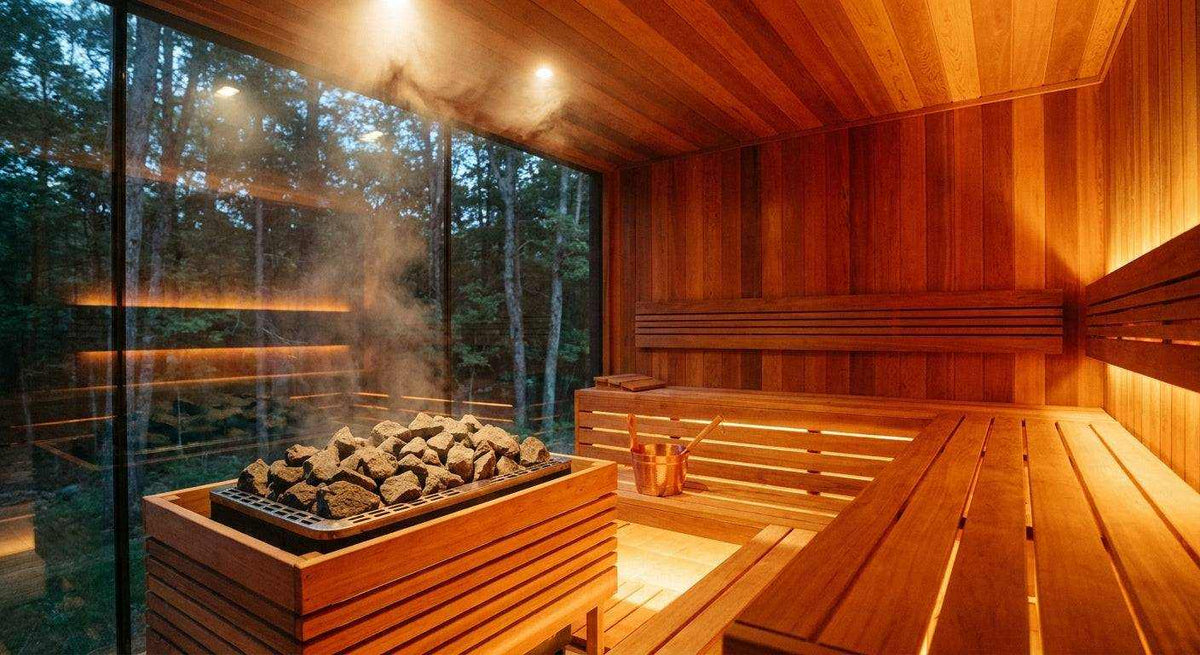
How Long Does a Sauna Take to Heat Up? By Type
By: Reid Hollis
How Long Does a Sauna Take to Heat Up?
How long does a sauna take to heat up? Infrared saunas reach a comfortable entry temperature in 10–20 minutes. Traditional electric saunas need 30–45 minutes. Wood-fired saunas require 45–90 minutes. These ranges assume proper heater sizing, solid insulation, and a clear understanding of what "ready" actually means for each type.
| Sauna Type | Heat-Up Range | Target Temp | Notes |
|---|---|---|---|
| Infrared (Ceramic Panels) | 10–15 min (comfortable entry); 25–40 min (full temp) | 110–150°F | Radiant heat; no löyly; can enter before max temp |
| Infrared (Carbon Panels) | 15–25 min (comfortable entry); 35–50 min (full temp) | 110–150°F | More even coverage; slightly slower than ceramic |
| Traditional Electric | 30–45 min | 150–195°F | Air temp AND stone temp must both be ready |
| Wood-Fired | 45–90 min | 150–200°F | Depends on stove, wood quality, chimney draft |
Important: These times are not universal promises. Room volume, heater output, insulation quality, and ambient temperature all affect the result. The real question is not just "how long" but "ready for what." Air temperature and stone temperature are not the same thing.
What Does 'Ready' Actually Mean for Your Sauna Type?
For a traditional electric sauna, heat-up is a two-step process. The cabin air must reach your target temperature (typically 160–195°F), and the sauna stones must reach approximately 600°F (300°C) or higher before they can flash water into proper löyly (steam). According to Saunom, citing Harvia's own measurements, electric heating elements run at roughly 1,075–1,255°F, while stone surface temperatures range from 300°F to 800°F depending on heater type and preheat duration.
Most heat-up time guides measure only air temperature. That is why experienced sauna users often wait the full manufacturer-recommended preheat, or longer, before throwing water on the stones. Air temperature reaching the set point does not mean the stones are ready for löyly.
For infrared saunas, "ready" means something fundamentally different: the panels are emitting full radiant output and the cabin has reached its lower set temperature of 110–150°F. The Clearlight Sanctuary owner's manual recommends allowing about 10–15 minutes for the cabin to warm up before a session. Ceramic panel models are comfortable to enter in 10–15 minutes but reach full temperature in 25–40 minutes. Carbon panel models are comfortable in 15–25 minutes, with full temp in 35–50 minutes. Many owners step in before maximum temperature is reached, and that is normal.
This distinction matters: infrared and traditional saunas are different products, not different speeds of the same experience. As Tahoe Sauna Company notes, infrared cannot produce löyly and operates at a lower temperature range by design. Comparing preheat times directly, without acknowledging this difference, leads to mismatched expectations.
Heat-Up Times by Sauna Type
Traditional Electric Saunas
A well-insulated indoor sauna room with a properly sized heater reaches 150–195°F in 30–45 minutes. A compact 2-person room (roughly 112 cubic feet) with a correctly sized heater can reach 180°F in 25–30 minutes indoors, according to Sweat Decks. A 3–4 person room with a 6 kW heater typically takes 30–40 minutes.
Brand-specific data adds useful context. The Harvia KIP series typically heats a properly sized sauna to 150–175°F in 20–30 minutes, with the KIP manual specifying a minimum 30-minute preheat and listing 160–185°F as normal sauna temperature. Stone-heavy HUUM models with 200+ kg of stones may require 45–60+ minutes to reach full bathing temperature, according to Peak Primal Wellness, because that large thermal mass takes longer to saturate with heat. Browse our Traditional Saunas collection to compare heater specifications across models.
Wood-Fired Saunas
Expect 45–90 minutes from lighting to stones hot enough for good löyly. The range depends on stove size, chimney draft, wood quality (dry birch heats far faster than damp softwood), and ambient temperature. The Finnish Sauna Society notes that heat-storing wood heaters generally take "a few hours" to fully saturate their large stone mass, and a chimneyless smoke sauna can take even longer.
Infrared Saunas
Ceramic heaters reach a comfortable entry temperature in 10–15 minutes, with full temp in 25–40 minutes. Carbon heaters are comfortable in 15–25 minutes, full temp in 35–50 minutes, according to Restore Suite. Full-spectrum systems combining carbon and near-infrared halogen emitters can bring the cabin up faster.
The Dynamic Avila 1-2-person and Dynamic Venice 2-person Low EMF FAR Infrared Sauna are compact infrared options where shorter preheat times are achievable due to smaller cabin volume. The Dynamic Lugano 3-person and Dynamic Bergamo 4-person Low EMF FAR Infrared Sauna are mid-to-large infrared options where the carbon panel warm-up range of 15–25 minutes to comfortable entry applies. The Dynamic Heming 2-person Corner Low EMF FAR Infrared Sauna uses a space-efficient corner format where cabin geometry can influence heat distribution and warm-up feel. Buyers should verify current kW ratings and target temperatures on the live product pages for any of these models.
Browse the full Infrared Saunas collection to compare models side by side. Heater sizing and temperature guides are available separately and are not repeated here.
What Affects How Long Your Sauna Takes to Heat Up?
Room Volume and Heater Sizing
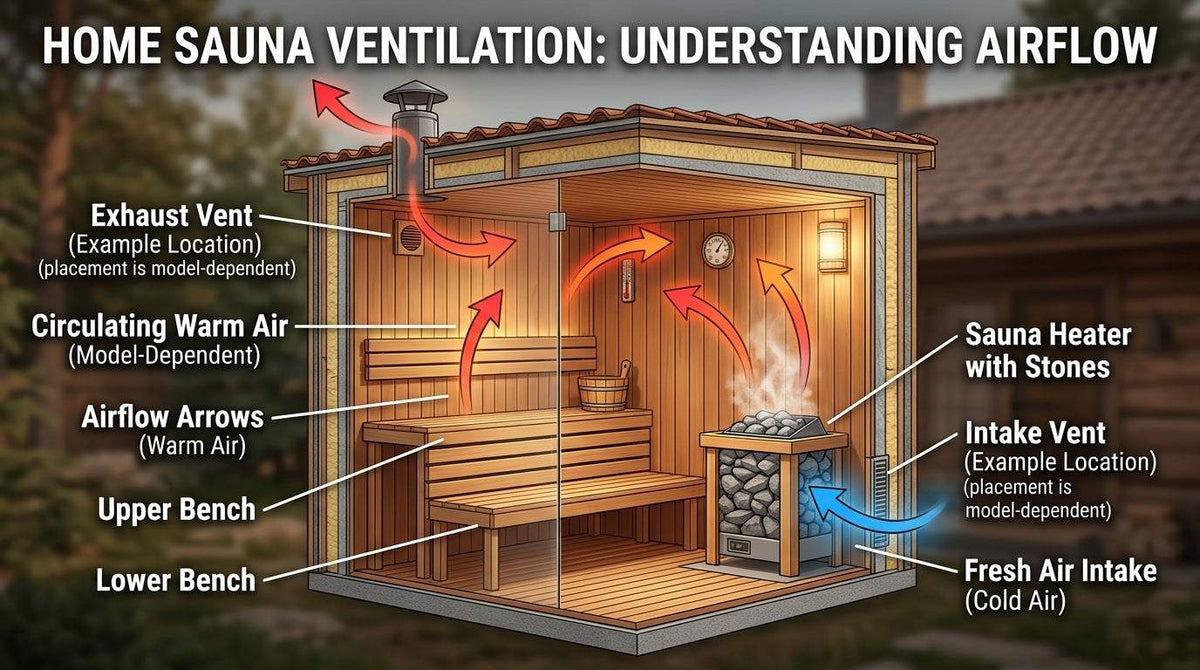
The industry standard is approximately 1 kW of heater output per 45–50 cubic feet of well-insulated indoor sauna space, according to Sun Home Saunas. An undersized heater is the most common reason a sauna takes too long to heat. If your sauna takes 60–90 minutes to reach temperature, that is often a heater-sizing problem, not a sauna problem.
Insulation Quality
A poorly insulated sauna in a cold climate can take 60–90 minutes to heat and struggle to hold 180°F. A well-insulated version of the same sauna in the same climate heats in 30–45 minutes. Insulation is not glamorous, but it is one of the biggest variables in real-world heat-up time.
Glass Surfaces
Every square foot of glass is a significant heat sink. Adding a glass wall without upsizing the heater results in longer heat-up times and difficulty reaching target temperature. Outdoor or panoramic glass designs typically require 20–30% additional heater capacity.
Outdoor Temperature and Cold-Weather Impact
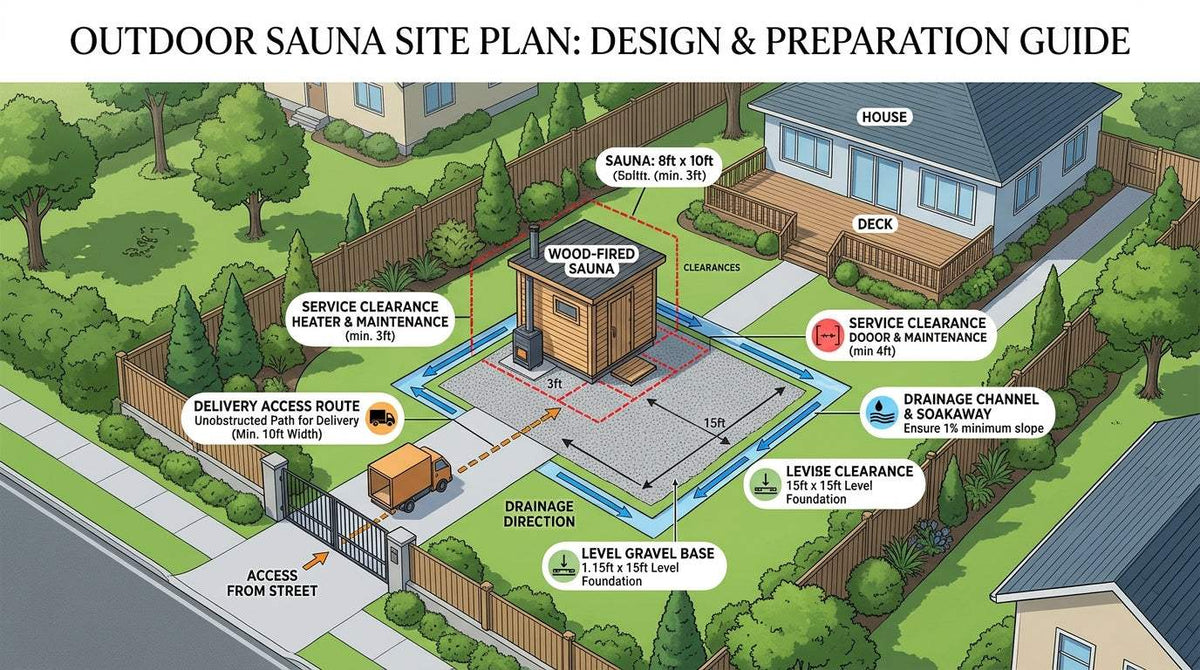
Outdoor saunas in winter typically add 10–20 minutes to standard heating times. According to SaunaPlace, saunas can take 20–50% longer to heat in winter. In extreme cold (below 0°F), infrared warm-up may exceed 40 minutes and peak temperature may drop 5–15°F, per Sun Home Saunas' outdoor infrared guide. Buyers in northern U.S. climates should plan for this and consider heater upsizing.
Starting Temperature
A sauna used the day before will heat faster than one that has been cold for a week. Outdoor installations exposed to freezing air start from a much lower baseline, which compounds with every other factor on this list.
Electrical Supply
A 240V system with a properly sized 6–9 kW heater reaches 180–190°F in 20–30 minutes, according to Sun Home Saunas' electrical requirements guide. A 120V unit may need 45–60 minutes and top out at lower temperatures. Infrared cabins typically use 1.5–3.5 kW on 120V circuits, per SoaknSweat.
Smart Controls and Scheduling
Harvia's MyHarvia app and HUUM's UKU Wi-Fi controls allow remote preheat scheduling. This effectively eliminates the wait of a 40-minute preheat competing with your evening. Start the heater from your phone on the drive home, and the sauna is ready when you walk in.
Quick Buyer Checklist: Which Heat-Up Time Fits Your Life?
- Want sessions under 20 minutes? An infrared sauna with ceramic panels gets you in fastest.
- Want löyly and steam? A traditional electric sauna is the right choice. Budget 30–45 minutes for preheat.
- Want a wood-fired ritual? Budget 45–90 minutes and prioritize dry hardwood.
- Buying for an outdoor northern U.S. installation? Add 10–20 minutes to any estimate and upsize heater capacity by 20–30%.
- Have a glass-front or panoramic design? Plan for additional heater capacity to compensate for heat loss.
No single preheat time applies universally. The right answer depends on room volume, heater kW, insulation, and ambient conditions specific to your home. Always verify model-specific heat-up times, kW ratings, and target temperatures on live product pages or current manufacturer manuals before purchasing.
Sauna Luxuries offers expert guidance on heater sizing, room volume fit, electrical requirements, and cold-weather performance as part of our white-glove buying support.
Frequently Asked Questions
How long does a 2-person sauna take to heat up?
A compact 2-person electric sauna (roughly 112 cubic feet) with a correctly sized heater typically reaches 180°F in 25–30 minutes indoors. A 2-person infrared cabin with ceramic panels is comfortable to enter in 10–15 minutes. Room volume, insulation, and heater kW all affect the result.
How long does a sauna take to heat up in winter?
Outdoor saunas in winter typically add 10–20 minutes to standard times. In extreme cold (below 0°F), expect 20–50% longer heat-up and potentially lower peak temperatures. Insulation quality and heater sizing are the primary levers you can control.
When are the sauna stones ready for löyly?
Stones need to reach approximately 600°F (300°C) or higher to flash water into proper steam. This typically requires the full manufacturer-recommended preheat time. Air temperature reaching the set point is not the same as stones being ready.
Is infrared faster than a traditional sauna?
Infrared reaches a usable state faster (10–20 minutes vs. 30–45 minutes), but it operates at a lower temperature range (110–150°F vs. 150–195°F) and cannot produce löyly. They are different products, not different speeds of the same experience.
Does a bigger sauna always take longer to heat?
Generally yes. Larger room volume requires more time and heater output. But a well-insulated larger sauna with a properly sized heater can outperform a smaller, poorly insulated room with an undersized heater. Sizing the heater correctly for the room matters more than room size alone.
Can I get in my infrared sauna before it reaches full temperature?
Yes. Many experienced owners preheat for 10–15 minutes and step in while the cabin finishes warming. Infrared panels emit radiant heat immediately, so you benefit from the session even before the air reaches its maximum set point. This is normal and recommended by most infrared manufacturers.
Find the Right Sauna for Your Warm-Up Expectations
How long a sauna takes to heat up depends on type, heater sizing, insulation, and conditions — not a single universal number. The ranges in this guide give you a realistic starting point, but your specific setup will determine the actual result.
At Sauna Luxuries, we help buyers match heat-up expectations to the right sauna type, heater size, and installation setup before purchase, not after. That is the approach our founder Reid Hollis built this company around: no-pressure, consumer-first guidance that sets accurate expectations from the start.
Browse our Traditional Saunas and Infrared Saunas collections to compare models. Manufacturer-backed specifications and verified product details are available for every model. Our team can walk through room volume, electrical needs, and cold-weather considerations for your specific situation whenever you are ready.
Sources
- Saunom – Sauna Stones: Types, Heat, and How to Use Them
- The Everything Depot – Infrared vs Traditional Sauna (citing Harvia KIP and Clearlight manuals)
- Tahoe Sauna Company – How Long Does a Sauna Take to Heat Up?
- Sweat Decks – How Long Does a Sauna Take to Heat Up to 180°F?
- Haven of Heat – Harvia Sauna Heater Buyer's Guide 2026
- Peak Primal Wellness – How Long Does a Sauna Take to Heat Up?
- Calore Health & Wellness – How Long Does a Sauna Take to Heat Up? (citing Finnish Sauna Society)
- Restore Suite – Sauna Heat-Up Time Calculator
- Sun Home Saunas – The Complete 2026 Guide to Sauna Heat-Up Times and Timing
- Haven of Heat – How to Add a Glass Wall to Your Sauna
- SaunaPlace – How Long Does a Sauna Take to Heat Up?
- Sun Home Saunas – Do Outdoor Infrared Saunas Get Hot Enough?
- Sun Home Saunas – Electrical Requirements for a Home Sauna
- SoaknSweat – Understanding Sauna Energy Consumption & Operating Costs

Written by Reid Hollis


Leave a comment
This site is protected by hCaptcha and the hCaptcha Privacy Policy and Terms of Service apply.