
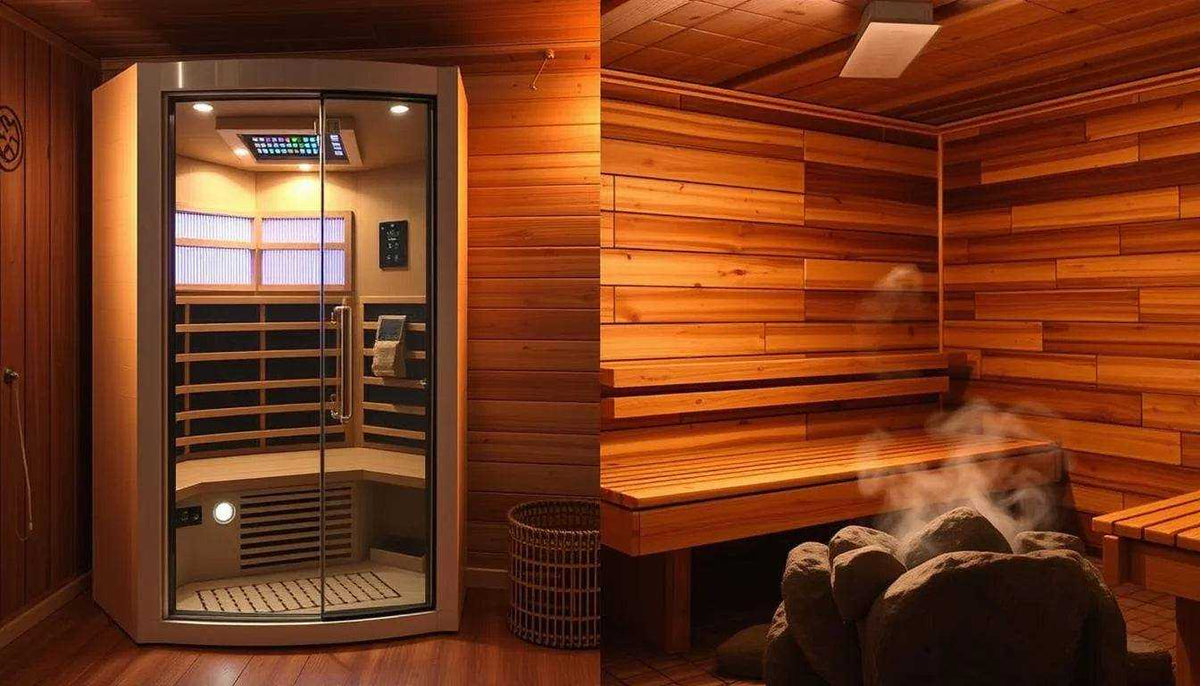
Infrared Sauna vs Traditional Sauna: Which Is Better?
Infrared sauna vs traditional sauna: the biggest difference is how heat reaches you. A traditional sauna uses an electric or wood-burning heater to warm the room, benches, and sauna stones. An infrared sauna uses radiant emitters that warm your body more directly while the surrounding air stays cooler.
For a home buyer, that one difference affects nearly everything else: temperature, steam, warm-up time, electrical requirements, installation, operating cost, and how the session actually feels.
Quick answer: Choose an infrared sauna if you prefer lower air temperatures, a compact indoor setup, and often simpler installation. Choose a traditional sauna if you want hotter air, heated stones, the option for löyly (water on approved sauna stones), and the classic Finnish-style experience. If you want both heating styles, a hybrid sauna can offer more flexibility.
Infrared Sauna vs Traditional Sauna at a Glance
| Comparison | Infrared Sauna | Traditional Sauna |
|---|---|---|
| How it heats | Infrared emitters deliver radiant heat toward the body | Electric or wood-burning heater warms the room and sauna stones |
| Typical air temperature | Often about 110–140°F (43–60°C), depending on the model | Often about 150–195°F (65–90°C), depending on the heater and room |
| Humidity | Generally dry | Can remain dry or gain brief humidity when water is added to approved hot stones |
| Warm-up | Often faster because the target air temperature is lower | Usually requires more time to heat the room and stones |
| Electrical setup | Some compact models use 120V; larger models may require dedicated or multiple circuits | Electric heaters commonly require a dedicated 240V or 208V circuit; wood stoves require proper chimney and clearances |
| Installation | Often simpler for prebuilt indoor cabins | Can require more electrical, ventilation, heater, clearance, and site planning |
| Experience | Lower-temperature, dry, steady radiant heat | Hotter room, heated stones, optional löyly, classic sauna ritual |
| Research base | Promising but smaller body of clinical research | Deeper long-term research base, especially for Finnish sauna bathing |
| Best fit | Buyers prioritizing comfort, compact indoor use, and convenience | Buyers prioritizing high heat, steam, tradition, and a more immersive sauna experience |
No category-wide specification applies to every sauna. Always check the exact voltage, amperage, temperature range, clearances, heater size, and installation requirements for the model you are considering.
How Infrared and Traditional Saunas Heat You
How an infrared sauna works

Infrared saunas use heating elements or panels that emit infrared energy. That radiant energy is absorbed at and near the skin, warming the body while the cabin air remains cooler than it would in a traditional sauna.
This is why many infrared sauna users can feel intensely warm even when the thermometer shows a lower air temperature. The experience is usually dry and steady rather than built around bursts of steam.
Infrared systems also vary. Some use far-infrared emitters, while others combine near- and far-infrared technologies and are marketed as full-spectrum models. If EMF levels or wavelength claims matter to you, compare the manufacturer's published specifications and independent testing rather than relying on a generic "low EMF" or "full spectrum" label.
You can compare current infrared saunas carried by Sauna Luxuries by size, electrical requirements, heater technology, materials, and features.
How a traditional sauna works

A traditional sauna uses a heater or stove to warm the room and a mass of sauna stones. The hot air, warm surfaces, and radiant heat from the heater and stones raise the temperature of the entire sauna.
When the heater and manufacturer instructions allow it, water can be poured onto the hot stones to create a short burst of steam known as löyly. This does not turn the sauna into a steam room. Instead, it temporarily raises humidity and changes how the heat feels on the skin.
Traditional saunas may use electric heaters or wood-burning stoves. Electric systems offer precise controls and convenient operation, while wood-burning systems can provide an off-grid or fire-driven experience but require additional chimney, clearance, and installation planning.
Browse traditional saunas or review our sauna heater guide if you are planning a traditional setup.
Temperature, Humidity, and Session Experience
Temperature is one of the clearest differences between infrared and traditional saunas, but it should not be treated as a competition over which one gets hotter.
Infrared cabins commonly operate at lower air temperatures, often around 110–140°F. Traditional sauna rooms commonly operate in a higher range, often around 150–195°F. Exact operating temperatures vary by model, heater, room construction, sensor location, and personal preference.
What infrared heat feels like
Infrared heat is typically dry, steady, and easier to tolerate for people who do not enjoy very hot room air. Because the surrounding air is cooler, some users prefer longer, slower sessions.
What traditional heat feels like
Traditional sauna heat is more room-enveloping. The benches, walls, air, heater, and stones all become part of the thermal environment. Adding water to the stones creates a noticeable change in humidity and perceived heat, which is a defining part of the traditional sauna experience for many users.
Neither experience is automatically better. The better choice is the one that matches the kind of heat you actually enjoy enough to use consistently.
Infrared vs Traditional Sauna Health Benefits: What the Research Actually Shows
Both sauna types expose the body to heat and can increase heart rate, circulation, sweating, and perceived relaxation. The important distinction is that the research bases are not equally mature.
Traditional sauna has the stronger long-term evidence base
Some of the best-known long-term sauna research comes from Finnish traditional sauna bathing. A 2015 prospective cohort study published in JAMA Internal Medicine followed 2,315 middle-aged Finnish men and found that more frequent sauna bathing was associated with lower rates of sudden cardiac death, fatal cardiovascular disease, and all-cause mortality.
That study was observational, so it cannot prove that sauna use caused the lower risk. It also studied Finnish men using traditional sauna, which means its results should not automatically be applied to every population or to infrared saunas.
Infrared sauna research is promising but more limited
Mayo Clinic notes that studies have explored infrared sauna use for several long-term health conditions, but larger and more rigorous studies are still needed to confirm many of the proposed benefits.
That does not mean infrared sauna has no value. It means buyers should separate a comfortable heat experience and promising research from marketing claims that go beyond the evidence.
Be careful with "detox," weight-loss, and cure claims
Sauna use causes sweating and temporary fluid loss, but rapid post-sauna weight changes are primarily water loss, not body-fat loss. The liver and kidneys remain the body's primary systems for processing and eliminating many waste products.
Claims that any sauna can cure disease, produce major toxin removal, or guarantee a specific medical result should be treated cautiously.
Installation and Electrical Requirements
For many home buyers, installation is the factor that ultimately determines whether infrared or traditional makes more sense.
Infrared sauna installation

Many compact one- and two-person infrared cabins are designed for residential indoor spaces and may use a standard 120V circuit. Larger infrared models can require higher amperage, dedicated circuits, multiple circuits, or other electrical provisions.
Do not assume that every infrared sauna is plug-and-play. Check the exact product manual and your home's available electrical capacity before ordering.
Traditional sauna installation
Traditional electric sauna heaters commonly require dedicated 240V or 208V electrical service, with circuit size determined by the heater and installation requirements. Heater output also needs to match sauna room volume and construction.
Wood-burning sauna stoves have a different set of requirements, including chimney components, fire clearances, floor and wall protection, and local code considerations.
If you are still deciding where the sauna will go, our indoor vs outdoor sauna guide covers additional placement considerations.
Important: electrical and code requirements vary. Follow the manufacturer manual and use a qualified electrician or contractor where required.
Cost and Energy Use: Which Sauna Is Less Expensive to Own?
There is no honest category-wide dollar figure that applies to every infrared or traditional sauna. Size, insulation, heater output, electrical work, site preparation, accessories, local labor rates, and electricity prices can all change the total cost.
Infrared cabins often have lower installation complexity because many are prebuilt indoor units with lower electrical demand. Traditional sauna projects can become more expensive when they require a larger heater, dedicated electrical work, outdoor foundations, ventilation planning, weather protection, or chimney components.
A better way to estimate operating cost
For an electric sauna, a simple starting formula is:
Heater or sauna kW × hours of operation × your local electricity rate per kWh = estimated electricity cost.
Real-world consumption may be lower than a simple maximum-output calculation because thermostatically controlled equipment can cycle rather than draw full rated power continuously.
Instead of choosing solely on theoretical energy cost, compare the actual electrical specifications of the models you are considering and estimate cost based on how often you expect to use the sauna.
Which Is Better for Your Home: Infrared or Traditional?
Choose an infrared sauna if:
- You prefer lower-temperature heat.
- You want a compact indoor sauna for one to a few people.
- You value faster warm-up and straightforward day-to-day use.
- You do not need sauna stones or löyly.
- You want to compare models that may work with common residential electrical setups.

Choose a traditional sauna if:
- You want the classic high-heat sauna experience.
- Heated stones and the option for löyly matter to you.
- You want a larger social sauna, outdoor sauna, barrel sauna, or cabin-style setup.
- You are comfortable planning for the required heater, electrical service, ventilation, or wood-stove installation.
- You value the sauna style with the strongest long-term observational research base.
What About a Hybrid Sauna?
A hybrid sauna can make sense if you genuinely want both heating experiences rather than forcing yourself to choose one.
Hybrid models combine infrared heating with a traditional sauna heater or another dual-heat configuration, depending on the manufacturer. That can allow lower-temperature infrared sessions on some days and hotter traditional sessions on others.
The tradeoff is that hybrid systems can be more complex and may have different electrical requirements than a standard infrared cabin. Review the exact model specifications before assuming it will install like a basic infrared sauna.
Maintenance and Long-Term Ownership
Both sauna types benefit from simple routine care: keep the interior clean, allow it to dry after use, follow manufacturer cleaning instructions, and inspect electrical components and wood surfaces periodically.
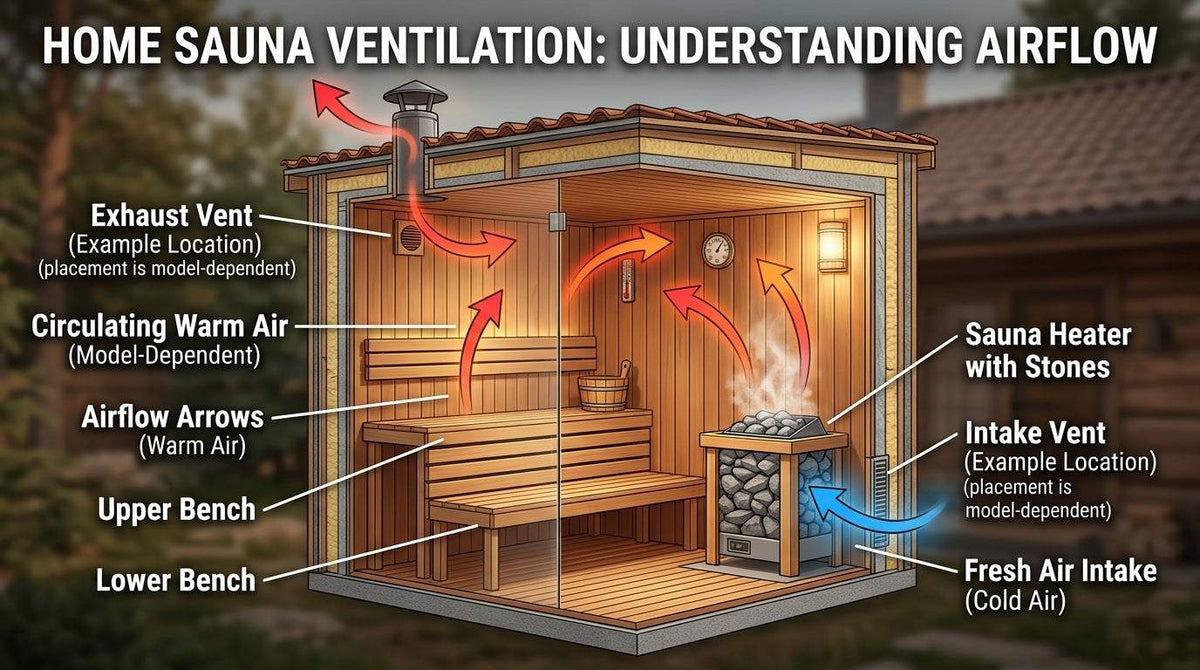
Traditional saunas may also require attention to sauna stones, heater clearances, ventilation, and wood surfaces exposed to repeated heat and humidity. Wood-burning systems add chimney and combustion-system maintenance.
Infrared cabins require clean, unobstructed heating panels and properly functioning controls and electrical connections. If you are comparing near-zero or low-EMF models, keep the manufacturer's testing documentation with your product records so you can verify what was actually measured.
Infrared Sauna vs Traditional Sauna: Final Takeaway
There is no universal winner in the infrared sauna vs traditional sauna comparison.
Infrared is usually the stronger fit for buyers who prioritize lower air temperatures, compact indoor installation, and convenience. Traditional is usually the stronger fit for buyers who want hotter air, sauna stones, löyly, and the classic sauna experience.
The most important buying decision is not which category sounds better in marketing. It is which specific sauna fits your space, electrical service, preferred heat, capacity, installation plan, and budget.
At Sauna Luxuries, we recommend comparing the actual product specifications before purchasing rather than assuming all infrared or traditional saunas install and perform the same way.
Start with our infrared sauna collection, traditional sauna collection, or hybrid sauna collection to compare current models.
Frequently Asked Questions
Is an infrared sauna better than a traditional sauna?
Not universally. Infrared is often better suited to buyers who want lower-temperature heat, a compact indoor cabin, and simpler installation. Traditional saunas are better suited to buyers who want higher heat, sauna stones, steam from löyly, and a classic Finnish-style experience.
What is the main difference between an infrared sauna and a traditional sauna?
A traditional sauna heats the room and sauna stones with an electric or wood-burning heater. An infrared sauna uses radiant emitters to warm the body more directly while operating at a lower air temperature.
Is a traditional sauna the same as a regular sauna?
In most consumer comparisons, "regular sauna" refers to a traditional sauna that uses a heater and sauna stones rather than infrared heating panels.
Which gets hotter: infrared or traditional sauna?
Traditional saunas generally operate at higher air temperatures. Infrared saunas usually operate at lower air temperatures while still creating strong perceived warmth through radiant heating.
Which sauna is easier to install at home?
Many compact infrared cabins are easier to install because some models are designed for common residential circuits. Traditional electric saunas often require dedicated higher-voltage electrical service, while wood-burning systems require proper chimney and fire-clearance planning. Always verify the specific model requirements.
Which sauna has better health research?
Traditional Finnish sauna has the stronger long-term observational evidence base, including major cardiovascular and mortality studies. Infrared sauna has a smaller body of research with promising findings in several areas, but Mayo Clinic notes that larger and more rigorous studies are still needed.
Are infrared saunas more energy efficient?
They can use less electricity in some home applications because many infrared models operate at lower temperatures and lower power levels, but efficiency depends on the exact sauna, session duration, insulation, electrical design, and how often it is used. Compare rated power rather than relying on category-wide claims.
Can you pour water on the heater in a traditional sauna?
Only when the heater and manufacturer instructions specifically allow water on the sauna stones. Never pour water onto electrical components or onto equipment that is not designed for löyly.
How long should a sauna session last?
There is no single duration that is correct for every person or sauna type. Beginners should start conservatively, stay hydrated, follow the manufacturer's instructions, and leave the sauna if they feel dizzy, weak, short of breath, or otherwise unwell. People with relevant medical conditions, people who are pregnant, or anyone taking medications that may affect heat tolerance should discuss sauna use with a healthcare professional.
Should I buy infrared, traditional, or hybrid?
Choose infrared for lower-temperature convenience, traditional for high heat and löyly, and hybrid if you want access to both experiences and the model's installation requirements fit your home.
Sources and Research Notes
This guide was written to distinguish established evidence from marketing claims. Key references include Mayo Clinic guidance on infrared saunas, Cleveland Clinic sauna safety guidance, and the 2015 JAMA Internal Medicine prospective cohort study by Laukkanen and colleagues on Finnish sauna bathing and cardiovascular and all-cause mortality. Health research describes population-level associations and does not guarantee individual outcomes.

Written by Reid Hollis



Leave a comment
This site is protected by hCaptcha and the hCaptcha Privacy Policy and Terms of Service apply.