

2026 Outdoor Sauna Guide: How to Design a Luxury Backyard Wellness Retreat
By: Reid Hollis
Why Outdoor Saunas Are Becoming the Centerpiece of Luxury Backyards
According to a recent survey by Alan's Factory Outlet, 77% of homeowners are planning a backyard upgrade in 2026. The smartest among them are anchoring that upgrade with an outdoor sauna.
This is not a niche trend. The global sauna market is projected to reach $1.56 billion by 2033, and residential installations are the fastest-growing segment, posting an 8.61% CAGR through 2031, according to Mordor Intelligence. Industry reporting names the dedicated at-home wellness center the fastest-growing request in luxury homes this year, and Business Research Insights reports that 35% of new high-end residential projects now include wellness facilities.
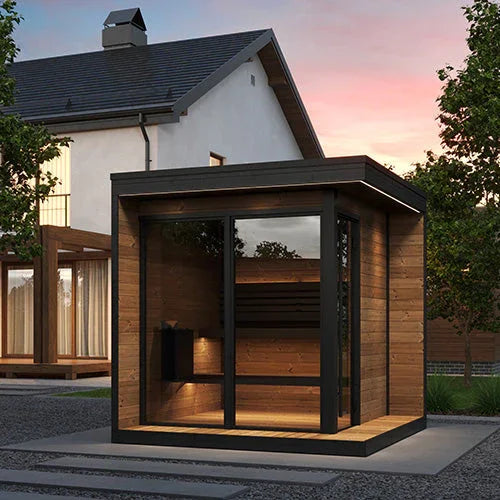
The outdoor sauna itself has evolved dramatically. Panoramic glass walls, thermo-treated hardwoods, and clean Scandinavian design lines have replaced the rustic cabin aesthetic. Homeowners are also redirecting gym memberships, spa visits, and wellness travel budgets into private home wellness infrastructure, a post-pandemic behavioral shift that has only accelerated into 2026.
Enter the "sparden": a dedicated outdoor wellness garden integrating saunas, cold plunges, outdoor showers, and lounge zones into a single cohesive landscape feature. As Marketersmedia reports, these thoughtfully designed environments are now defining the luxury backyard. The outdoor sauna is both a daily health tool and a strategic long-term home investment, not merely a lifestyle amenity.
Choosing the Right Sauna: Size, Style, and Heat Source
The first decision in designing your backyard wellness retreat is selecting the right sauna. Two primary types dominate the outdoor market: traditional and infrared.
Traditional saunas operate at 160 to 200°F using electric or wood-burning heaters. They heat the surrounding air, creating the classic high-heat, steam-capable experience. Warm-up time typically runs 30 to 45 minutes. Infrared saunas operate at a lower 120 to 150°F, heating the body directly through infrared panels. They warm up in roughly 10 minutes and use approximately 30% less energy than traditional models, according to testing by Sweat Decks.
In terms of market share, traditional saunas hold the largest U.S. segment at 44.28%, while infrared is the fastest-growing segment globally at a 7.5% CAGR, according to Grand View Research. Both are excellent choices depending on your goals and preferences; they simply deliver different heat experiences.
From a monthly operating cost perspective, traditional outdoor saunas run approximately $30 to $60 per month with regular use (four to seven sessions weekly), while infrared saunas cost roughly $15 to $30 per month.
Sizing should match how you plan to use the space:
- Solo or couple use: A compact 1 to 2 person sauna
- Family use: A 3 to 4 person sauna
- Entertaining or full retreat: A 5+ person sauna
In terms of investment tiers, barrel saunas typically range from $6,000 to $11,000 (including foundation and electrical), while premium cabin or custom builds run $18,000 to $36,000. Think of these as different tiers of a long-term investment, not simply entry-level versus luxury.
Smart sauna features are becoming the norm at the premium level. According to Topture, 34% of new sauna installations in 2025 were smart or energy-efficient models. App-controlled preheat, remote monitoring, and red light therapy integration are now expected features for discerning buyers.
Browse the Sauna Luxuries outdoor sauna collection to compare options by size, heater type, and design style.
Designing the Full Backyard Wellness Experience
The sauna is the anchor, but a true luxury backyard wellness retreat extends well beyond a single structure. The most compelling outdoor wellness spaces in 2026 include complementary elements: a cold plunge, outdoor shower, lounge seating, privacy landscaping, and ambient lighting.
The defining trend this year is the "Fire and Ice" contrast therapy circuit. Alternating between sauna heat and cold plunge immersion has moved from elite athlete culture into mainstream backyard design, fueled by biohacking media and wellness influencers. The global cold plunge tub market is projected to reach $659.86 million by 2033 at an 8.1% CAGR, with North America leading at 38.8% market share. Outdoor cold plunge tubs are the top-selling format precisely because they pair so naturally with outdoor saunas for a complete hot-cold recovery routine.
Between sessions, a well-designed transition zone makes all the difference. Weather-resistant lounge seating, towel storage, and a covered area between the sauna and cold plunge ensure year-round usability. An outdoor shower adds both function and a spa resort feel, serving as the perfect place to rinse and cool down between rounds.
Lighting design elevates the entire retreat. Integrated LED lighting inside the sauna, pathway lighting from the house, and ambient outdoor fixtures extend evening usability and create a mood that feels intentional and refined.
Explore the Sauna Luxuries cold plunge and sauna accessories collections to find the complementary pieces that complete your backyard retreat.
Placement, Privacy, and Layout Considerations
Placement is one of the most overlooked pre-purchase decisions, and getting it wrong can undermine even the finest sauna. Start by orienting the sauna to capture a desirable view from inside: a garden, mature trees, or a water feature. At the same time, ensure the sightline provides privacy from neighbors and adjacent properties.
The access path from your home matters more than most buyers realize. A clear, safe, all-weather walkway between the house and sauna dramatically improves daily usability, especially in winter climates where a muddy or icy path discourages regular sessions.
Drainage planning is essential. Outdoor saunas require proper drainage beneath and around the structure to prevent water damage and wood rot over time. Electrical planning is equally critical: traditional electric saunas typically require a dedicated 240V circuit. Consult a licensed electrician and check local permitting requirements before purchasing. Wood-burning saunas require additional clearance from structures and landscaping per local fire codes.
Year-round usability should be a core design priority. Insulated sauna structures, weather-resistant wood, and heated or covered pathways make outdoor saunas functional in cold climates, unlike pools or patios that sit unused for months each winter.
For privacy landscaping, consider evergreen hedges, cedar fencing, pergolas, and strategic planting. These elements create a secluded retreat feel without sacrificing airflow or natural light.
Materials, Weather Resistance, and Long-Term Durability
Material quality is the single biggest differentiator between an outdoor sauna that lasts decades and one that warps within months. At the foundation of every durable sauna is kiln-dried lumber with 8 to 12% moisture content. In independent testing, several budget models arrived with 15 to 18% wood moisture content and showed visible warping within three months of outdoor installation.
The most common wood species for premium outdoor saunas each bring distinct advantages:
- Western red cedar: Naturally rot-resistant, aromatic, and the most widely used species in outdoor sauna construction
- Hemlock: Denser and less aromatic, excellent for interior benches and seating surfaces
- Thermo-treated spruce: Dimensionally stable and ideal for harsh climates and exterior cladding
Premium outdoor sauna models (typically $8,000 and above) feature kiln-dried Nordic woods, advanced ventilation systems, and commercial-grade warranties. Budget models under $3,000 generally use lower-grade wood and minimal insulation, a tradeoff that becomes apparent after one to three seasons outdoors.
Glass doors and panoramic windows have become standard at the premium tier. Tempered safety glass adds natural light, a visual connection to the surrounding landscape, and an elevated architectural aesthetic.
Heater quality deserves equal attention. A well-matched, properly sized heater ensures even heat distribution, efficient warm-up, and long-term reliability. Undersized heaters are a common and costly mistake. The U.S. Department of Energy underscored the importance of sauna energy efficiency by awarding a $5 million grant to the National Renewable Energy Laboratory for research on energy-efficient sauna technology.
Weather-resistant exterior finishes, stainless steel hardware, and proper roof overhangs extend the lifespan of an outdoor sauna significantly in rain, snow, and UV-heavy climates.
Common Mistakes to Avoid Before Buying an Outdoor Sauna
Buying the wrong size. Undersized saunas feel cramped during regular use, while oversized saunas are inefficient to heat and cost more to operate. Match the sauna to your actual usage pattern using the sizing guide above.
Skipping the electrical and permitting phase. Many homeowners discover after purchase that their property requires a panel upgrade or permit approval, delaying installation by weeks. Handle this research before you buy.
Choosing the wrong heater type. Wood-burning heaters require more maintenance and ventilation planning. Electric heaters offer convenience and smart controls. Match the heater to your lifestyle and how hands-on you want each session to be.
Neglecting foundation and drainage prep. A sauna placed on an unprepared surface will shift, trap moisture, and deteriorate faster. A proper gravel pad or concrete foundation is not optional.
Ignoring insulation quality. Poor insulation means longer heat-up times, higher energy bills, and inconsistent session temperatures, a problem that compounds in cold climates.
Prioritizing price over wood quality. The moisture content and species of the lumber determine how the sauna performs and looks after one to three seasons outdoors. This is not the place to cut corners.
Not planning for the full retreat layout. Placement, privacy, access paths, and complementary elements such as cold plunges and showers should all be mapped before any sauna purchase is made.
The Home Value Case for an Outdoor Sauna
A well-designed outdoor sauna is not just a wellness investment; it is a financial one. In wellness-conscious markets such as the Pacific Northwest, Colorado, and Minnesota, a premium outdoor sauna can increase home value by 5 to 15%, typically adding $5,000 to $20,000 in resale value depending on type, quality tier, and local demand, according to Haven of Heat.
The buyer interest is real. According to a survey cited by Haven of Heat, 42% of homebuyers consider a sauna a desirable feature when shopping for a new home. Sauna ROI is estimated at 50 to 70% return on investment upon resale, particularly in urban and suburban markets with health-conscious buyer pools, as reported by Hoozzee.
With 46% of consumers actively considering personal saunas for home use, an outdoor sauna positions your property to appeal to a growing and motivated buyer segment. The wellness home real estate premium is measurable and growing. Frame it not as a discretionary luxury, but as a strategic home improvement with both financial and lifestyle returns.
How Sauna Luxuries Helps You Build the Right Backyard Retreat
Sauna Luxuries is a premium online retailer specializing in luxury outdoor saunas, cold plunges, sauna heaters, and backyard wellness products for customers across the continental United States. Our curated selection spans multiple size categories, heat source types, and design styles, helping you compare options based on your space, budget, and long-term goals.
We understand that choosing between traditional and infrared, barrel and cabin, wood-burning and electric can feel overwhelming. That is exactly why we exist. Sauna Luxuries is built to help you navigate these decisions with confidence, not to bury you in a catalog of thousands of generic products.
Whether you are designing a compact two-person retreat or a full backyard wellness circuit with a cold plunge and accessories, our team is here to help. Browse our outdoor sauna collection, compare sauna heaters, explore cold plunge tubs, or reach out directly for personalized guidance. When you are making a $5,000 to $15,000+ purchase decision, the right information matters as much as the right product. Sauna Luxuries provides both.
Start Designing Your Backyard Wellness Retreat Today
In 2026, the outdoor sauna is no longer a luxury add-on. It is the anchor of a serious backyard wellness retreat and a smart long-term home investment. The homeowners making the most impactful backyard upgrades this year are not stopping at a patio or fire pit; they are building private wellness infrastructure that pays off in daily health and long-term home value.
The key design pillars are clear: choose the right sauna size and heat source, plan the full retreat layout, pair heat therapy with a cold plunge, invest in quality materials, get placement and privacy right, and avoid the common pre-purchase mistakes that lead to costly regrets.
Browse the Sauna Luxuries outdoor sauna collection, explore our cold plunge options, or contact our team to start planning the backyard wellness retreat you will use every single day.
Sources
- Alan's Factory Outlet – America's Top Backyard Trends 2026
- Mordor Intelligence – Sauna and Spa Market Report, January 2026
- Fun Outdoor Living – Outdoor Living Trends 2026
- Business Research Insights – Sauna and Spa Market Size, 2025
- Marketersmedia – Outdoor Sauna Concepts & Backyard Wellness Retreat Design: 2026 Guide
- Sweat Decks – The 20 Best Home Saunas in 2025
- Grand View Research – Sauna Market Size, Share & Growth
- Topture – Sauna Industry Statistics 2026
- Grand View Research – Cold Plunge Tub Market Size & Share
- PR Newswire / Technavio – Sauna Market in US to Grow by USD 151.3 Million
- Haven of Heat – Do Saunas Increase Home Value?
- Hoozzee – How Adding a Sauna Can Increase Property Value

Written by Reid Hollis






Leave a comment
This site is protected by hCaptcha and the hCaptcha Privacy Policy and Terms of Service apply.